


Secularization of the missions
The Mexican government ends the California mission system. Mission properties are confiscated, and Spanish missionaries are sent into exile. Native laborers who had lived at the missions find work on the ranchos. The former mission lands comprise rich, coastal areas that are coveted by soldiers, rancheros, and farmers. The government splits land parcels into individual “rancho” grants and either sells or gives them away to private citizens.
RELATED STORIES

“Paayme” sung by Lazaro Arvizu Jr.
Lazaro Arvizu Jr. is an artist, educator, musician, and researcher dedicated to the culture of the First Peoples of Los Angeles. In the video he performs the song “Paayme”, meaning “West” in the Tongva language, which he wrote with his mother Virginia Carmelo. With the LA River as a backdrop, Lazaro sings about moving West…
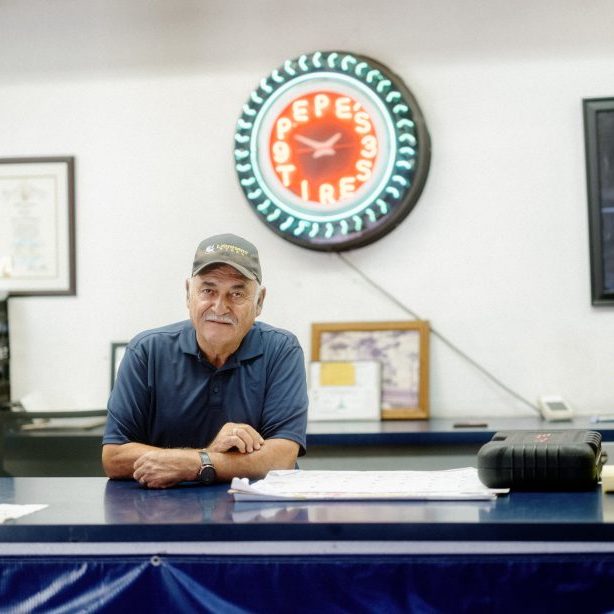
Tires, Oil Changes, and Community Building
Since 1977, Pepe’s Tire Shop in Cypress Park has continued to provide quality service to its customers, growing into a true pillar of the community. Raised in the border town of Tecate, Mexico, Pepe arrived in Los Angeles in 1966 at the age of 17 and landed in the then-Italian neighborhood of Cypress Park. At…

Fighting for Educational Justice
Ronni Solman moved to Los Angeles in 1970, for work and to chase the sun. At the time, she was involved with the New York chapter of the Committee to Defend the Black Panthers, working to raise money for legal defense for the Black Panther Party. The group needed a representative to work with the…

Atwater is Home
When Joyce Cooper was thirteen, she along with her mother and younger brother moved from Koreatown to Atwater Village. Only a few miles apart, but a world of a difference. “We lived on the eighth floor of an apartment building. I went to Hobart Elementary and I had a lot of cool friends. Our class…